
When learning to play the guitar, beginners often focus on chords, scales, or strumming patterns. However, one of the most important foundations of good technique is proper hand positioning. Correct placement of both the left and right hands not only ensures cleaner sound and greater control but also helps prevent tension and long-term injury.
Left Hand Positioning
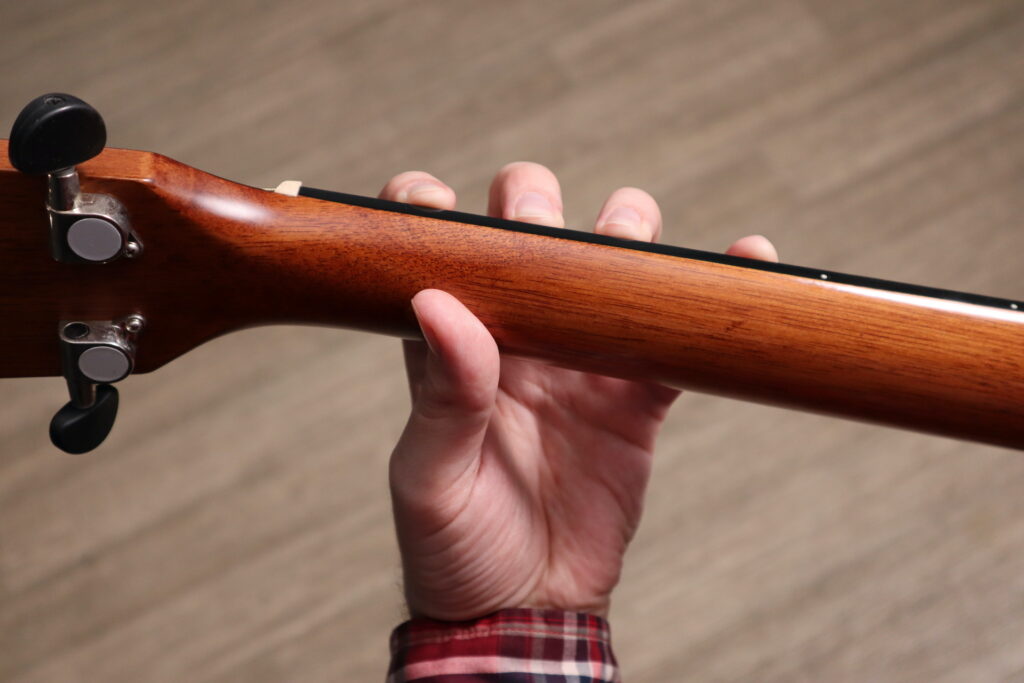
The left hand is responsible for pressing the strings on the fretboard. A relaxed and natural position is essential:
- Thumb placement – The thumb should rest lightly behind the neck, usually around the middle, providing support without squeezing. Avoid letting the thumb rise too far over the top unless the style demands it.
- Curved fingers – Fingers should remain curved and press the strings with their tips. This allows each note to ring clearly without unintentionally muting adjacent strings.
- Economy of motion – Keep the hand close to the fretboard and minimize unnecessary movements. Smooth transitions between chords and scales become easier when the fingers move efficiently.
Right Hand Positioning

The right hand (or left, for left-handed players) controls tone production, whether with a pick or with fingers.
- With a pick – Hold the pick between the thumb and index finger, keeping the grip firm but relaxed. The wrist should remain flexible, allowing for fluid strumming and precise picking.
- Fingerstyle – When plucking with the fingers, the hand should hover naturally above the strings. Each finger should move independently, but without excessive tension. The wrist should be slightly arched, avoiding collapse.
- Anchor and rest – Some guitarists lightly rest the side of the palm on the bridge for stability, especially in certain genres. This technique should never create stiffness or mute the strings unintentionally, unless used intentionally for palm muting.
Common Mistakes to Avoid
- Pressing too hard with the left hand, which leads to unnecessary fatigue.
- Bending the wrist at extreme angles, causing strain.
- Holding the pick too tightly, reducing flexibility and speed.
- Ignoring relaxation—tension in the hands quickly spreads to the shoulders and back.
Why Hand Positioning Matters
Proper hand positioning is not only about technique but also about long-term health. Many guitarists suffer from tendonitis or repetitive strain injuries due to years of incorrect posture. Developing correct habits early ensures greater freedom, endurance, and musical expression.